
The month is now over. The month is done.
After that, you can check the bank account of the restaurant.
The number you received wasn’t what you would have expected.
For owners of restaurants, this is a problem because profits and cash flow appear to tell the same story. Both of them don’t match with each other. A P&L evaluates the how well the company’s financials have performed over a certain time while the bank account represents the time frame of money going into and out the business.
Knowing the difference could change the way an owner considers restaurant financials.
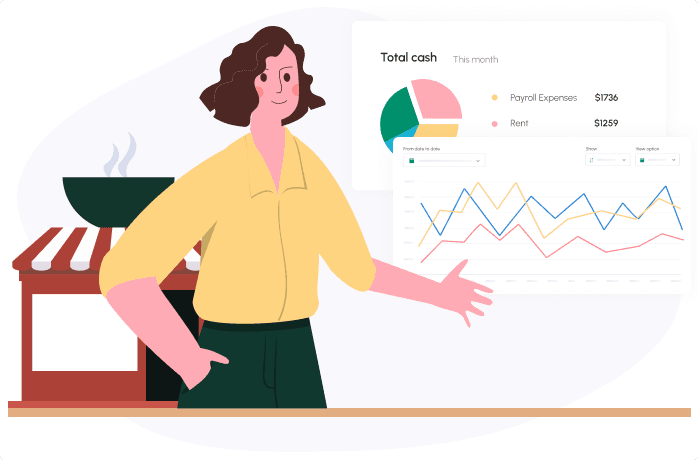
Check out the typical week. Food is paid for by customers. Employees have to be paid. Deliveries of food and beverages arrive with invoices. Rent is close to being paid. The credit card deposit is also timed. The sales tax collected has an obligation.
Already the purchases for the week ahead have begun.
Looking only at revenue or the ending profit number isn’t a good way to assess the full scope of what happens.
The clue could be hidden in the Prime Cost
Food, drink and labour cost are all worth a close look when restaurant profitability starts to go downhill.
Cost of goods sold combined with labor is the prime cost. The Bookkeeping Chefs’ provided instructions place the main cost between 60-65 percent of the revenue for many restaurants. They also stress regular monitoring of the week instead of waiting until the end of the month.
It is crucial for you to recognize changes early than obsessing about an exact percentage.
Let’s say that a restaurant typically performs within its targets however, this week’s rate rises. Maybe overtime also increased. The price of drinks may have remained the same while the food expenses increased. A higher proportion of food might prompt the operator to review purchases, waste management, menu mix and portions, or vendor bills.
The percentage is the most important. The answer lies in the activity of the restaurant.
A weekly report can make an opportunity for conversation while everyone still remembers what happened.
The details are more difficult for you to remember just a few days later.
When the vendor invoices arrive
Restaurants may purchase ingredients during a week and pay for them next week. This is the reason understanding profit alone doesn’t answer every cash question.
Vendor invoices have to be received and logged. In the course of manual processing, a busy business with many suppliers can become a huge administrative burden.
Automating the account payable process can assist in coordinating this process by reducing the time-consuming handling of bills and payments. The account owner will have more precise information about the obligations that haven’t yet landed on their bank account through integrated bookkeeping systems.
It’s important because a bank balance viewed in isolation may appear to be healthier than the restaurant’s actual short-term position.
The current balance could be an amount of $80,000 in the account. The $80,000 amount is little if vendors, rent, or payroll will take up a large portion over the next few days.
That leads naturally to cash flow forecasting.
Instead of asking “How much cash do we have?” the better question becomes “What will be the fate of our cash following the cash we anticipate to receive and the obligations we know about?”
This distinction is crucial in determining the appropriateness of the appropriate time to make an additional purchase or replace equipment, or maintain liquidity.
The cash you received may Not be Yours
Sales tax illustrates this in particular.
The money restaurants receive from their customers will eventually have to be dealt with in accordance with the tax requirements. If the money is mentally placed in the same category as operating cash, the balance of the bank can create a misleading sense of what is available to spend.
Regularly updated records ensure the tax compliance of sales while providing management with a more accurate view of the restaurant’s finances.
This is one reason why restaurant accounting works better when financial obligations aren’t viewed as separate entities.
Prime cost affects margin. COGS and future payment are affected by the purchase of vendor products. Payroll has an impact on both the labor percentage as well as cash. Cash availability is affected by sales tax. P&Ls track financial performance, while forecasting lets management examine the future.
The pieces are linked.
Bookkeeping Chef utilizes restaurant-specific reporting and system integrations that help put all the pieces together. Specialized outsourced bookkeeping services are an ideal option for owners who don’t have time to manually reconcile financial information. They will take care of a lot of the accounting duties while removing the proprietor from financial discussions.
The last sentence is vital.
It’s not our goal for restaurant owners to not check their books just because someone else does. It is important that owners get information so they understand what’s going on.
So if the P&L says the restaurant made money but the bank account is feeling a little tight, don’t assume one of the numbers could be off.
Find out what happened between you and your spouse.
The answer to this question will reveal more about the restaurant than just the number.
